
From Research to Roadmap: Parkinson’s Medication App
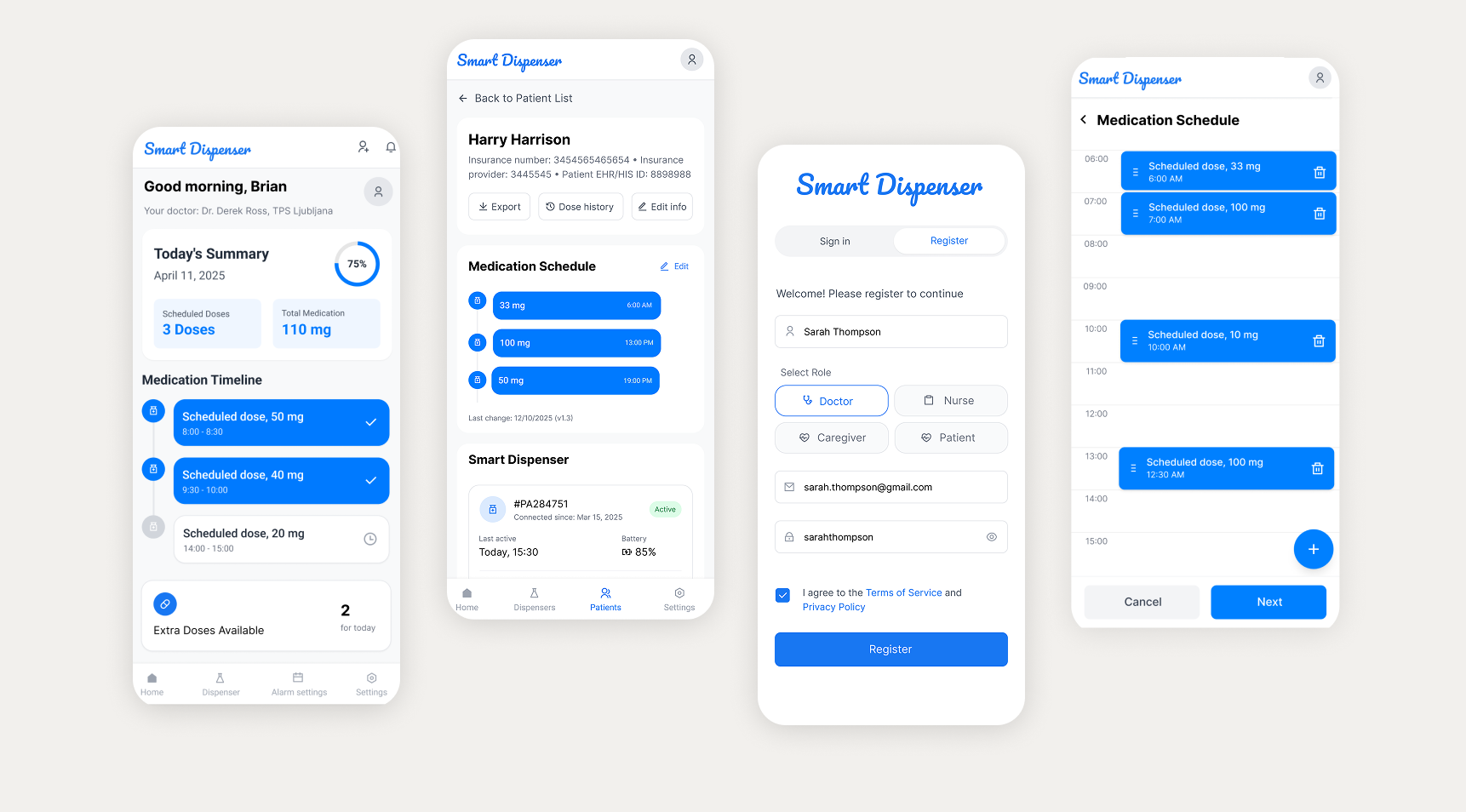
Managing Parkinson’s Disease (PD) requires consistent, timely medication intake and adaptability, as treatment becomes increasingly complex with symptom progression. Patients often take multiple medications daily, yet adherence often remains low, leading to a major challenge in PD management: controlling dyskinesia, involuntary movements caused by fluctuating medication levels. Personalised, consistent and more accurate dosing is essential to minimise these effects, making precise timing through an app and medication dispenser critical for maintaining daily quality of life.
To address this, a new medication dispenser device is being developed to deliver medication. But hardware alone is not enough — a connected digital platform was needed to support patients, caregivers, and healthcare professionals. That’s when we came on board — to guide the Discovery Phase of the app ecosystem for this device.
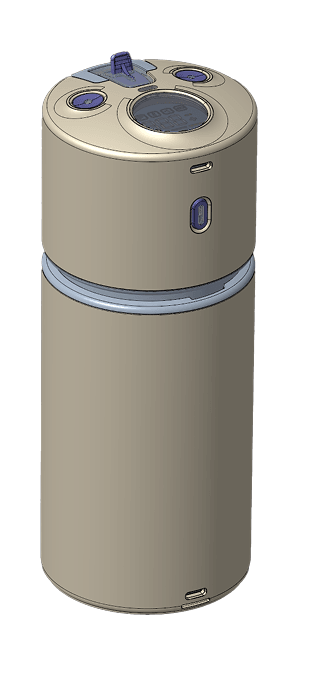
Smart Dispenser Prototype
Comprehensive Product Discovery
10+ USER interviews
We interviewed 12 stakeholders—healthcare staff, PD patients, and caregivers—using tailored plans to uncover daily medication challenges, tech comfort, and experiences with tools and platforms, gathering first impressions of the solution.
Identifying USER Challenges and opportunities
Personalized medication plans and clear reminders; device usability must support motor symptoms. Patients often have multiple conditions and track symptoms manually by note-taking. Meal timing impacts effectiveness, needing better scheduling. Healthcare staff face time constraints and scattered data. Simplicity and accessibility are crucial for older users.
Competitive Analysis & Product-Market Fit
Benchmarked against competitors, this non-invasive solution targets mid-stage Parkinson’s patients (≥4 doses/day), offering faster, more consistent relief, better adherence, remote monitoring, lower-cost potential and prolongs the period before patients require invasive treatments.
Desktop Research and Literature Review
We reviewed 30+ studies on Parkinson’s treatment, understand challenges in personalized dosing and long-term management, including drug delivery methods and technology advances.
MAPPING IDEAL USER JOURNEY
for all user types and defining the path towards it, covering onboarding, setup, and daily use, with role-based access and unified login to ensure a seamless, scalable experience across clinical and home settings.
Strategic MVP PRIORITISATION & Design
with future requirements to balance short-term feasibility with long-term growth, choosing a PWA for its cross-device support and app-like experience. Tailwind UI enabled fast, clean design, with the medication schedule interface shaped by doctor input to match real workflows.
User-specific functionalities
COMPLEX DOSING SCHEDULE PERSONALIZATION
for doctors to manage patient dosing schedules and track medication adherence daily, weekly, and monthly, with a possibility of managing multiple diseases.
self-onboarding options
through clear instructions or tutorials how to use and maintain solution.
easy to use for non-tech-savvy users
Simple and intuitive, especially during first-time use.
SYMPTOM TRACKING & MEDICATION FEEDBACK
currently handled manually via handwritten notes done by patients themselves.
MEAL TIMING
significantly affects medication effectiveness, requiring better support for scheduling around food intake (most importantly protein-type meals).
ECOSYSTEM
User Journey & Multi-User Ecosystem
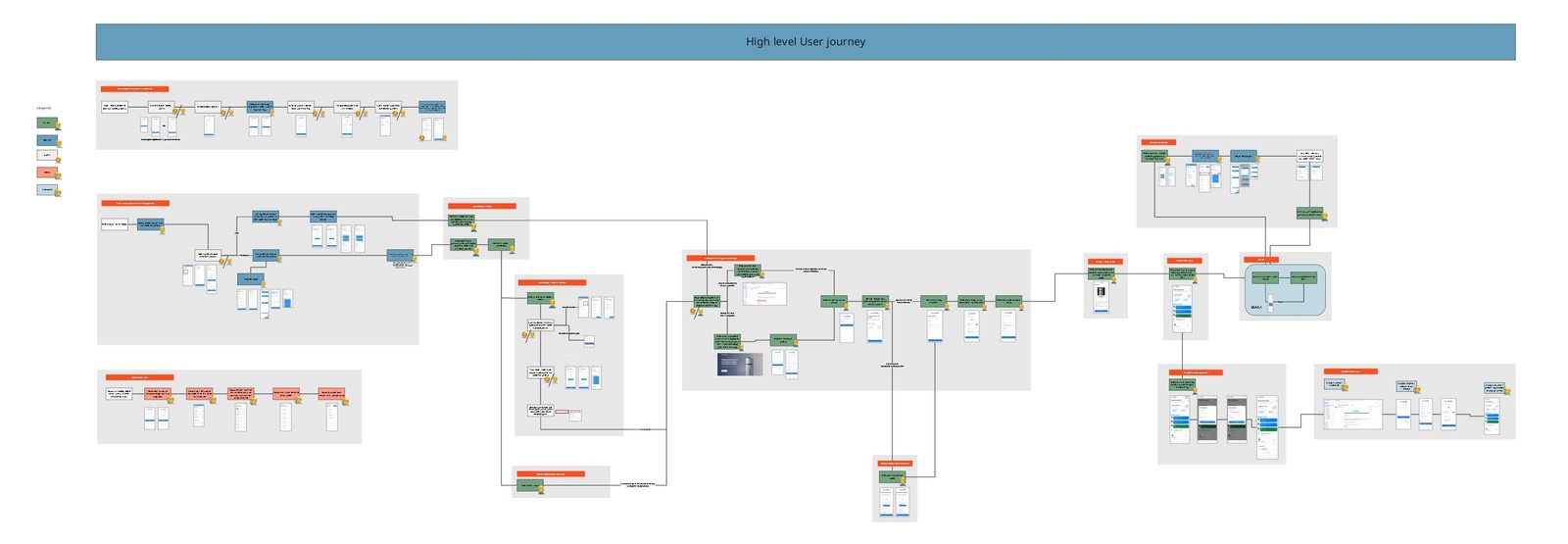
Highlevel multi-user journey and different entry points
IOT
Designing a Seamless IoT Ecosystem
We planned and designed the integration between the smart dispenser and the broader platform across key touchpoints: the device, its companion app, and the underlying data infrastructure and ecosystem behind it. The focus was on reliable connectivity, secure data flow, and an intuitive pairing experience—creating seamless interaction between the physical product and its digital interface.
Device Connectivity
We explored and defined how the smart dispenser will connect to the broader ecosystem. Our focus was on outlining the technical foundation for secure and smooth pairing, device setup, real-time sync, error recovery. The platform spans the device, and integration with Progressive Web App (PWA), cloud services, and backend services and analytics to support a seamless cross-platform experience.
Usability and Handling
We explored the real-world usability of the bottle—how users interact with it daily (dispensing, using, receiving notifications, syncing) and defined handling scenarios through workshops, mapping how users interact with it in everyday and edge-case scenarios, anticipating what users need to do and face in each scenario—like missed doses, travel, or maintenance. For every state, including errors and issues, we defined clear feedback, intuitive handling and simple guidance.
Device Display Design
We designed the device screen to adapt to every scenario: dosing, maintenance, or errors. using clear visuals and cues. consider limited screen sizes, connectivity issues, and the context in which users interact with the device.
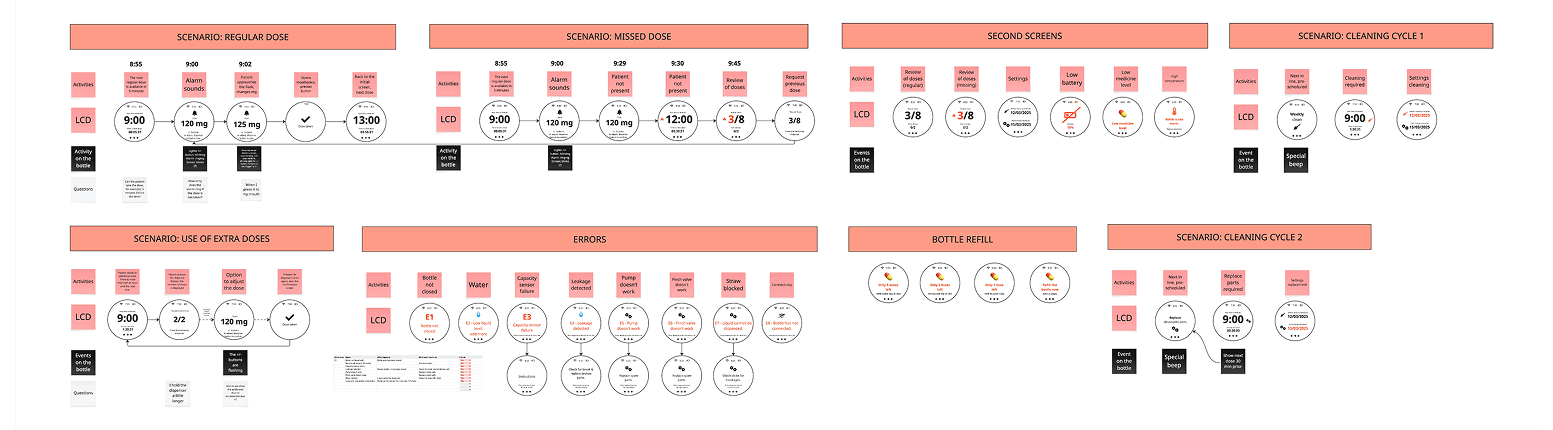
Device display design and different scenarios
Thorough Tech Research
Evaluated technical requirements
including secure authentication, user roles, and cloud infrastructure (DigitalOcean, Firebase, Cloudflare).
Explored device connectivity protocols
for real-time syncing, dose confirmation, and error reporting.
Prioritized scalability, data security, and compliance
for sensitive patient records.
Deliverables
Research Results and Key Insights
Derived from user interviews, desktop research, competitive analysis, and product-market fit evaluation.
High-Fidelity Clickable Prototype
Interactive prototypes representing the MVP stage of the application, covering defined key user journey flows and core functionalities.
System architecture plan
to define the technical foundations of the product.
UX and Usability Evaluation of the Connected Device
We defined the device’s usability and UI, covering all interaction scenarios and error states to ensure clear guidance and intuitive handling.
Breakdown, Estimations, and Roadmap
Includes a timeline with user stories, acceptance criteria, and development priorities for both MVP and nice-to-have features.


Newsletter
Join Beka, our resident goat on her quest to understand the mysteries of building & launching digital products. From Business & Design to Engineering, Processes & Teams.
